The Little Bird With the Hidden Ruby Crown Is Passing Through Missouri Right Now
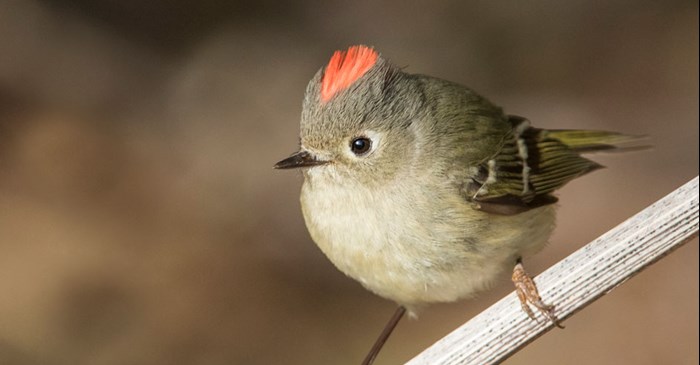
I watched a bird this morning that weighs less than two nickels hover at the end of an oak branch, flicking its wings so fast they blurred. It was a Ruby-crowned Kinglet, barely four inches long, and it had probably flown here from somewhere in Canada. These tiny birds pass through the Ozarks every October on their way south, and unless you know to look for them, you’ll miss them. We use the Merlin app to help us identify birds by their sound. It’s free and so fun!
The Hidden Crown
Like most animals, the males and females look different. The males carry a brilliant red patch on the top of their heads, but they keep it hidden almost all the time. You can watch a Ruby-crowned Kinglet for an hour and never see a hint of red. Then something startles it or excites it, and for just a moment, the crown flares open like a secret it couldn’t keep any longer. If you see it, you’ll wonder if you actually saw it! Unless you happen to be looking through some good binoculars. Which, by the way we just got some really good ones last year from Mr Stan’s Nature Shop in St James. Do you have a favorite spot to get your nature items locally? Share in the comments and let us know!
October’s Travelers
Right now, the preserve is full of these October travelers. Yellow-rumped Warblers are moving through the woodland edges in loose flocks, their yellow patches flashing when they turn. White-throated Sparrows are scratching in the leaf litter, making more noise than you’d expect from something that small. Dark-eyed Juncos showed up last week, which always feels like the official announcement that winter is coming whether we’re ready or not. I like a little winter for about a day then am ready for 72 degrees again 🙂
The deer are announcing things too. I found three fresh rubs on young sassafras trees along one of our favorite trails yesterday, the bark stripped clean where bucks have been working their antlers. The season is changing – I’m trying to stay relaxed about it and remind myself the sun is here to stay for awhile and we still have a few more months before the cold cold.
A Season of Passage
October in the Ozarks has always been a season of preparation and passage. During the Civil War, after the Battle of Wilson’s Creek in August of 1861, these hills became uncertain ground. Families didn’t know who would come through next or what they would demand. People learned to read the signs, to notice what was moving and when. That kind of attention wasn’t a hobby. It was survival.
We don’t need those skills the same way anymore, but I think we’ve lost something by not practicing them. Noticing what’s passing through, what’s preparing, what’s changed since last week. It’s a different way of being in a place.
A Migration Study for October
If you have children at home, this week is a perfect time for a simple migration study. Pick three spots, maybe a woodland edge, an open field, and near water. Spend thirty minutes in each one with a notebook. Write down every bird you see or hear, what it was doing, and what the weather felt like. Don’t worry about identifying everything perfectly. The point is to notice that different birds use different places for different reasons, and that October is a crossroads.
Compare your lists. Where did you see the most activity? Where were birds feeding? Where were they just passing through? Add a layer by mapping where the late asters and goldenrods are still blooming and see if there’s a connection to where you found the most insects, the most birds.
This is how naturalists have always learned. Not from books first, but from watching.
They’ll Return
The kinglets will be gone in a few weeks, headed further south. But they’ll be back through in April! Make a note in your homeschool journal where you hear them this year and see if you hear and see them around the same time next year!