The Flower That Bleeds: What Bloodroot Taught Me About Showing Up Before You’re Ready
A White Square on the Forest Floor
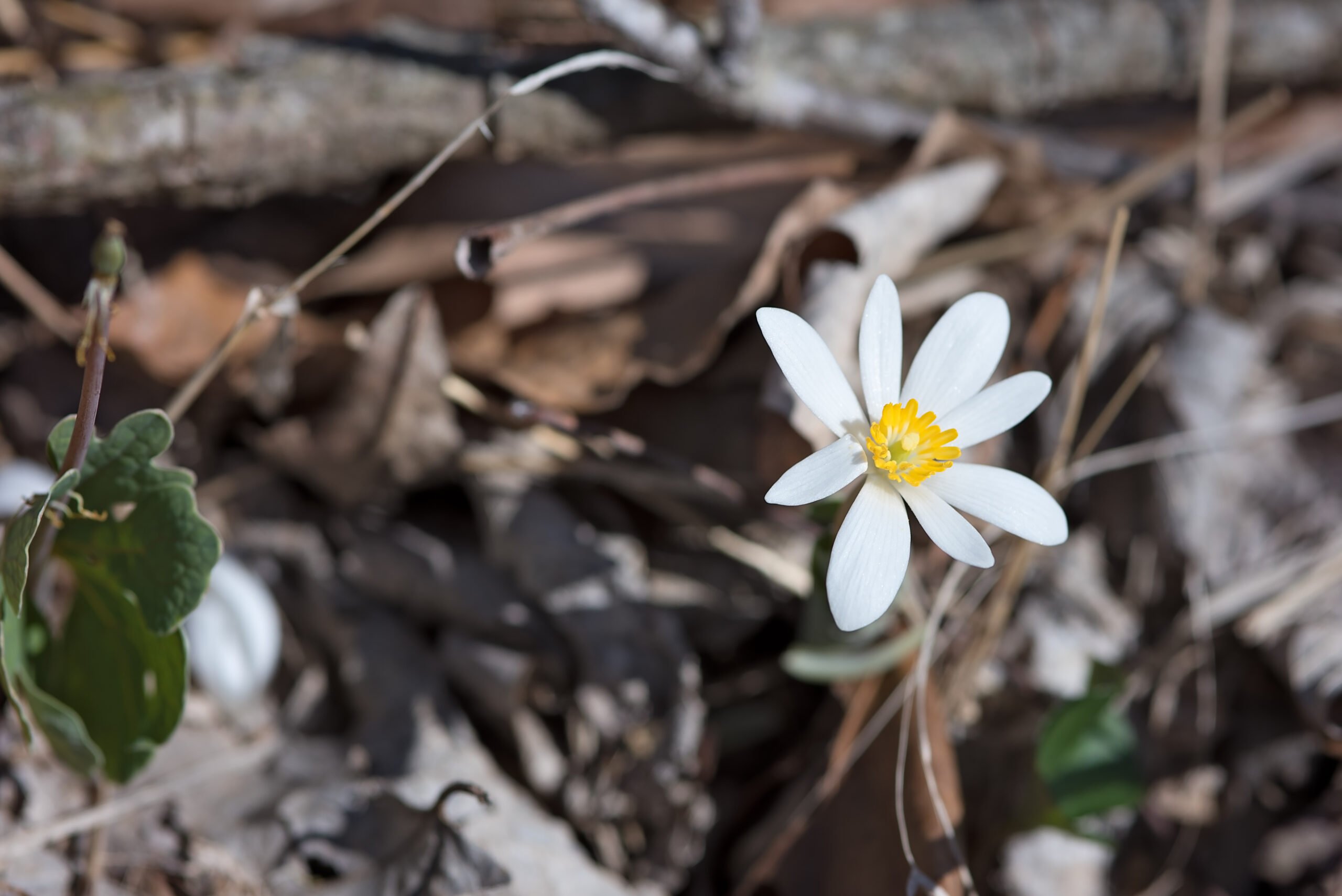
I found my first bloodroot of the season yesterday morning, tucked against the base of an oak where the leaf litter had pulled back just enough. Eight white petals, arranged in that odd square shape that makes you do a double-take. By the time I walked back that way in the afternoon, two of those petals had already dropped.
That’s the thing about bloodroot. The whole show lasts one or two days per flower. If you’re not paying attention during the first week of April, you miss it entirely. And most people do.
The Red Heart of the Matter
Here’s what most folks don’t know: snap that stem or nick the root, and you’ll find out how this plant got its name. A reddish-orange juice runs through it — thick enough that the Cherokee, the Choctaw, and the early Ozark settlers all used it as dye. War paint. Fabric dye. Basket stain.
The root is a stubby, horizontal thing that looks almost like a finger buried in the soil. That’s where the plant stores everything it needs to pull off this impossible feat — emerging, blooming, setting seed, and retreating, all before the oaks overhead bother to unfurl their leaves. Bloodroot doesn’t wait for perfect conditions. It works with the light it has.
Heritage Connection: Medicine Before Medicine
Before there were pharmacies in the Ozarks, there was bloodroot. Settlers learned from Indigenous peoples that the root, used carefully, could treat skin conditions and respiratory complaints. It showed up in folk remedies across Missouri well into the twentieth century.
I think about the women who knew where to find it — who walked these same ridges in early April, scanning the ground for that one white square against the brown. That knowledge got passed hand to hand, season to season. Some of it made it through. Some of it didn’t. Part of what we’re doing here at the preserve is making sure the thread doesn’t break again.
Homeschool Corner: A Two-Day Window
If you’ve got kids who are learning to observe the natural world, bloodroot is one of the best teachers I know. Here’s your assignment for this week: find a patch of bloodroot — on your land, in a local woods, or here at the preserve — and visit it two days in a row. Sketch or photograph the same flower both days.
What changed? How many petals fell? Did the leaves unfurl more? This is phenology in action — the study of seasonal timing. Your kids are doing real science, the same kind naturalists have done for centuries. No special equipment required. Just eyes and a willingness to show up twice.
An Invitation
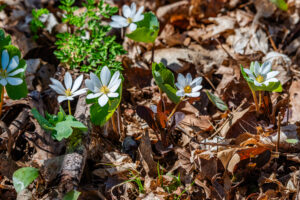
Bloodroot is blooming right now on the preserve, along with a handful of other spring ephemerals that won’t wait for anyone. If you’d like to see them for yourself, our trails are open to visitors, and our farmhouse stays put you close enough to walk out your door at dawn and catch them in that early light.
Or find them where you are. The Ozarks are full of quiet, fleeting things that reward the people who pay attention. Bloodroot is one of them. It doesn’t announce itself. It just shows up, does its work, and disappears — trusting that someone, somewhere, is watching.
Go be that someone this week.