
Napoleon’s Secret and the Dirt Beneath Your Feet: How Missouri Became America
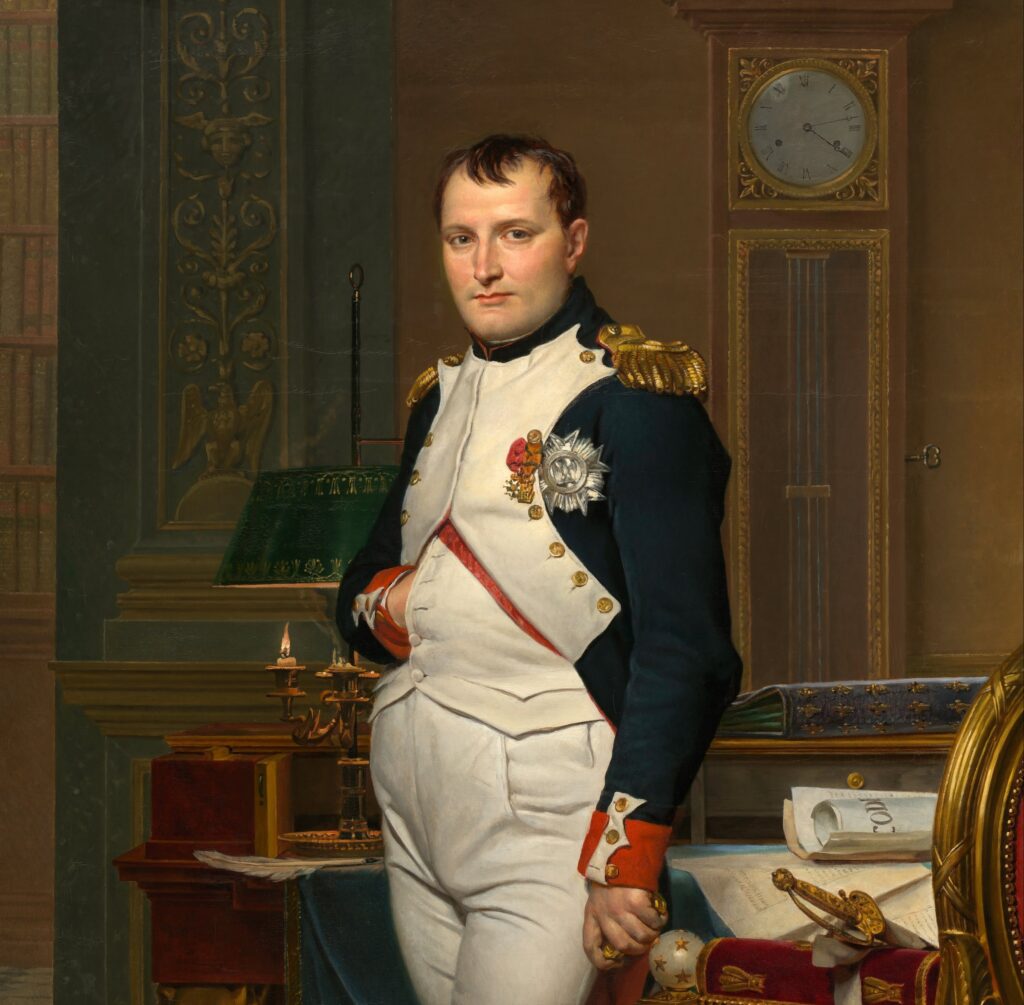
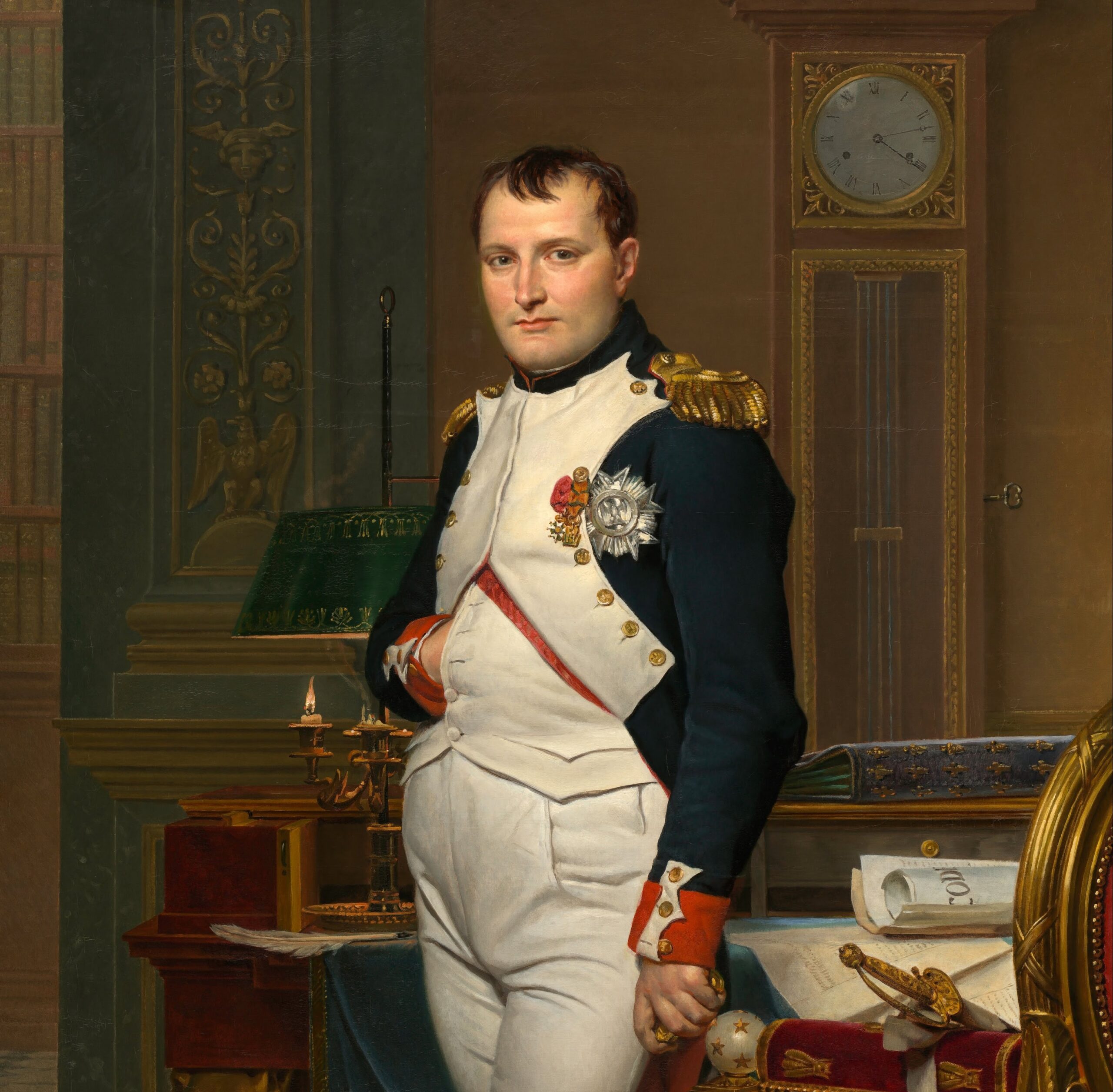
The Emperor Napoleon in His Study at the Tuileries, oil on canvas by Jacques-Louis David, 1812; in the National Gallery of Art, Washington, D.C.
Napoleon Bonaparte was losing. This struggle would eventually be tied to the Louisiana Purchase and Missouri history, setting the stage for a fascinating chapter in America’s past.
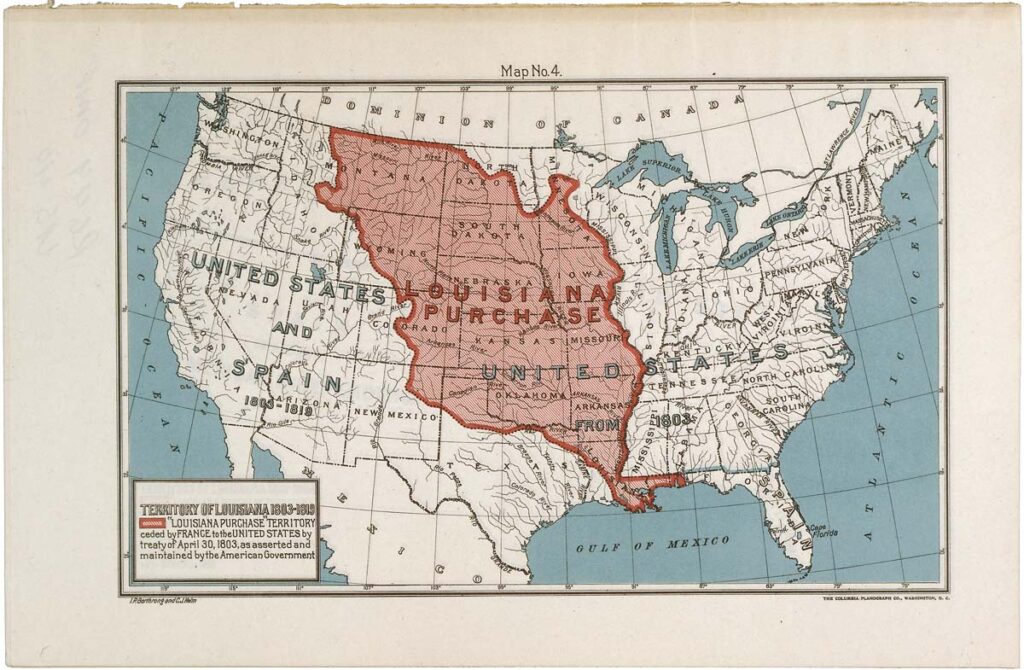
By the spring of 1803, his dream of a French empire in the Americas was already in ruins. A slave rebellion in Saint-Domingue — the island we now call Haiti — had cost France more than 50,000 soldiers. Britain was circling. War in Europe was grinding down his treasury. And the vast Louisiana Territory, stretching from New Orleans north to Canada and west to the Rockies, was becoming a liability he couldn’t afford to defend.
So he sold it.
But Wait… There’s More
On April 30, 1803, two American diplomats — Robert Livingston and James Monroe — walked out of a meeting in Paris with something they had not been sent to negotiate. President Thomas Jefferson had dispatched them to buy a single port city: New Orleans, which controlled access to the entire Mississippi River and thus the entire American interior. His instructions had been specific. Acquire New Orleans, and if possible, a strip of Florida coastline.
They came home with 828,000 square miles.
Charles-Maurice de Talleyrand — Napoleon’s famously cunning foreign minister — had presented the offer almost casually, as if it were obvious. The entire Louisiana Territory, for $15 million. The Americans had been authorized to spend up to $10 million for New Orleans alone. They said yes before Talleyrand could change his mind.
Missouri was in that deal.
These hills, this watershed, this specific patch of Ozark plateau — all of it transferred from Napoleon Bonaparte’s treasury to Thomas Jefferson’s republic for a price that works out to approximately three cents an acre.

A President With a Constitutional Problem
What most people don’t know is that Jefferson wasn’t sure he had the legal authority to make the purchase at all.
The Constitution said nothing about the federal government acquiring foreign territory. Jefferson — who had spent years arguing for a strict interpretation of constitutional powers — recognized immediately that he was about to do something that fell outside those powers. He actually drafted a constitutional amendment to authorize the transaction. His cabinet talked him out of it. The Senate would ratify the treaty before an amendment could be passed, and Napoleon might take the deal off the table.
Jefferson bought the land. He worried about the Constitution later.
The Senate ratified the Louisiana Purchase treaty on October 20, 1803, by a vote of 24 to 7. The Federalist opposition, led by Senator William Plumer of New Hampshire, argued it was unconstitutional, that it would upset the balance of existing states, that it was reckless and dangerous. They were outvoted.
And on March 10, 1804, in a square in St. Louis, Missouri, a ceremony took place that most Americans have never heard of. Captain Amos Stoddard, representing the United States government, received the formal transfer of Upper Louisiana from the Spanish lieutenant governor Carlos Dehault Delassus. Under the complicated terms of the deal, France had technically held the territory for exactly one day. So the French flag went up first — and then came down. Then the American flag went up.
The Ozarks were American.
The Gateway State
Missouri itself wouldn’t achieve statehood until 1821, and even that moment came wrapped in crisis. The Missouri Compromise of 1820 drew a political line at latitude 36°30′ — the southern border of Missouri — and declared that no new slave states could be admitted north of it. Missouri came in as a slave state. Maine came in simultaneously as a free state. The balance held, barely, for another three decades.
But once Missouri was in the Union, it became the literal launching point for American westward expansion. Lewis and Clark departed from St. Charles, Missouri, on May 14, 1804. The Santa Fe Trail began in Franklin, Missouri. The Oregon Trail began in Independence. The Pony Express rode out of St. Joseph. The Butterfield Overland Mail crossed through the Ozarks.
We are not the middle of the country. We are where America decided which direction it was going.
What Three Cents an Acre Means Today
As America turns 250 this July 4th, I keep returning to this moment. The Louisiana Purchase was arguably the most consequential real estate transaction in human history — and it happened because a French general was losing a war he’d picked in the Caribbean, an American president had a constitutional crisis of conscience, and two diplomats in Paris said yes to a deal they’d never been authorized to make.
That’s how the Ozarks became American. Not through grand design. Through desperation, pragmatism, and a little bit of audacity on both sides of the Atlantic.
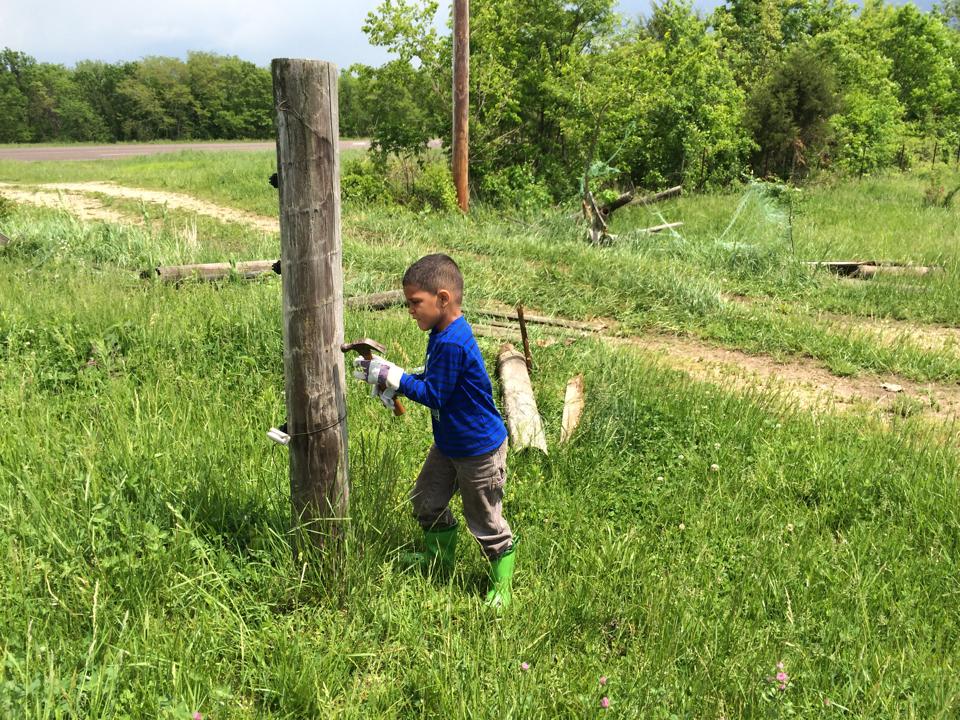
I think about that when I walk the fence line here. My name is on a deed for this land — a deed that sits in a chain of title that goes back through Missouri statehood, through the territorial period, through that ceremony in St. Louis in March of 1804, through Osage territory, through centuries of a people who called themselves the Children of the Middle Waters and understood this plateau as their home long before any government claimed the right to sell it.
The Louisiana Purchase is in the soil here. Every place in Missouri is, in some sense, a chapter of that story.
This year, as the country marks its 250th anniversary, I think it’s worth pausing to notice that Missouri isn’t incidental to the American story. We are, in a very specific way, the place where the story changed direction.
That’s worth knowing. Worth telling. Worth standing on.
🍓 Bring It Home
Three questions to ask your kids about the deal of the century:
1. Napoleon sold 828,000 square miles for $15 million. The entire U.S. government budget in 1803 was about $9 million. How did Jefferson pay for it? (Answer: international bonds — primarily financed through British and Dutch banks. Yes, the British helped fund American westward expansion.)
2. Jefferson wasn’t sure the Constitution allowed him to buy the land — but he did it anyway. Should he have? What would you have done?
3. Find Missouri on a map. Now find all the states that came from the Louisiana Purchase. Count them. (Answer: all or part of 15 states, including Arkansas, Iowa, Kansas, Nebraska, Oklahoma, North Dakota, South Dakota, Montana, Wyoming, Colorado, and Missouri itself.)